
I know this is an extremely tricky question. But may I share an idea that might just work some magic?
Section 6(2) of the Intellectual Property Act, No. 36 of 2003 of Sri Lanka (IPA), may be the starting point of this entire discussion.
It provides:
“The works specified in subsection (1) of this section shall be protected by the sole fact of their creation and irrespective of their mode or form of expression, as well as of their content, quality and purpose.”
I began by reverse engineering the creative process behind a song to unpack the rights of the individuals who bring it to life. The fundamental question is: At what precise moment is a song created? Is it when the lyricist writes the words? When the musician composes the melody and adds the music? Or when the vocalist breathes life into the lyrics and music through his voice?
The IPA does not expressly use the term “song”. However, Section 6(1)(e) recognizes “musical works, with or without accompanying words”. This provision offers an interesting starting point for examining the relationship between lyrics and music. It also supports the argument that a musical work can exist independently of lyrics. Taking the idea a step further, music built around a beat can exist without either a lyricist or a vocalist.
But that is not quite the point I wish to make.
Let us consider the creative union of a lyricist, a musician and a vocalist.
If the lyrics are the skeleton of a human body, the musician gives that skeleton its flesh and form. The vocalist, meanwhile, is the pulse that sets the entire creation in motion, connecting its elements and breathing life into the composition.
Perhaps, it is at this intersection of creative contributions that we must begin to reconsider the birth of a song.
Now comes the intriguing part.
If a singer can demonstrate that, in creating a song, he or she exercised free and creative choices that went beyond merely executing the instructions of others, could that singer claim copyright as an author or co-author of the resulting musical work?
My argument is that an original singer who makes a genuine creative contribution should not automatically be regarded as someone who merely provides technical assistance to an intellectual creation that already exists. Depending on the nature and originality of that contribution, the singer may have participated in the creation of the work itself.
If the contribution satisfies the applicable legal requirements for authorship, this raises a compelling question: should the singer be entitled to claim copyright for a song, including the relevant economic and moral rights, rather than being confined to the neighbouring or related rights ordinarily associated with performers?
Of course, this argument requires a careful examination of the distinction between authorship of a musical work, authorship of a sound recording, and the rights of performers under the Sri Lankan legal framework. Not every expressive or technically accomplished performance will necessarily amount to authorship. The crucial issue is whether the singer’s contribution reflects sufficient free and creative choices to qualify as an author’s contribution to the relevant work.
This line of thought warrants a closer revisit to Chapter I of the IPA and, more broadly, to the distinction between copyright and related rights.
Should an original singer whose free and creative choices help shape the identity of a song be recognized as one of its authors? Or does the IPA undervalues the creative contribution of an original singer by offering protection for that singer only through neighbouring or related rights?
Perhaps it is the time to revisit the question.
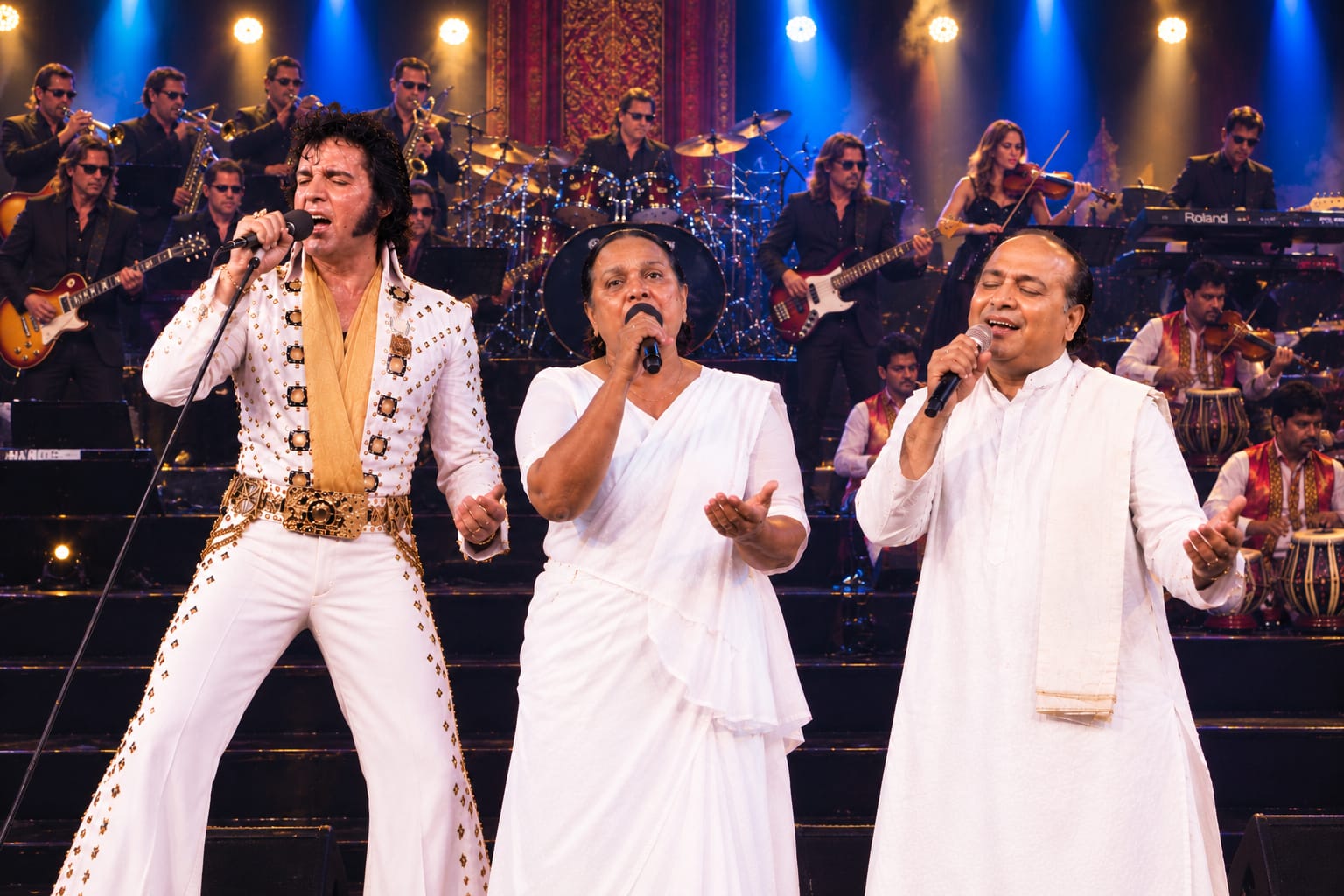
Until then, here is some food for thought till you listen to your favourite singer (song) perform your favourite song.
What if the voice you fondly enjoys is not merely performing the song, but an integral part to the original intellectual creation of that song?
Ishan Rathnapala